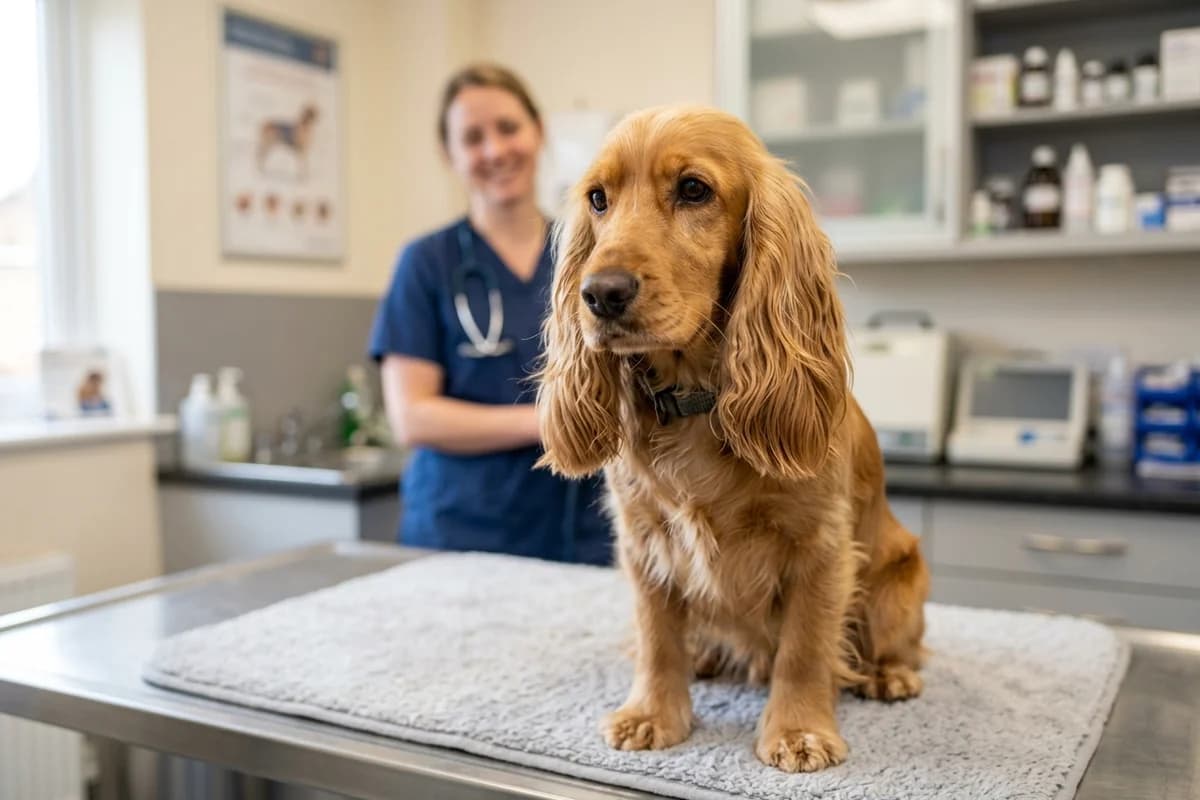
Is your dog constantly shaking their head, scratching their ears with frantic pawing, or whining when you stroke their head? Have you noticed a sour, musty odor or a thick dark brown discharge inside their ear canal? In South Kolkata, canine ear infections (Otitis Externa) represent one of the top reasons pet parents visit our veterinary clinic on Diamond Harbour Road, Alipore.
Unlike human ear canals which are short and straight, a canine ear canal has an "L-shape" with a vertical drop followed by a sharp horizontal turn towards the delicate tympanic membrane (eardrum). In Kolkata's subtropical humidity (often >80%), this anatomy creates a warm, dark, unventilated incubator where opportunistic yeast and bacteria proliferate rapidly.
1. High-Risk Breeds for Ear Infections in Kolkata
While any dog or cat can develop ear trouble, breeds with heavy, pendulous (floppy) ear flaps or hairy ear canals are at highest risk:
- Cocker Spaniels & Beagles: Long heavy ear leather completely seals the canal opening, blocking air circulation.
- Golden Retrievers & Labrador Retrievers: High propensity for atopic skin allergies and moisture retention after baths or swimming.
- Shih Tzus, Poodles & Lhasa Apsos: Dense fur grows deep inside the vertical canal, trapping waxy cerumen and moisture.
- French Bulldogs & Pugs: Narrow, stenotic ear canals prone to chronic allergic inflammation.
2. The 3 Primary Culprits: Yeast vs Bacteria vs Mites
Not all ear infections are the same, and using the wrong medication can make the infection worse:
1. Fungal & Yeast Overgrowth (Malassezia pachydermatis)
The #1 cause in Kolkata. Characterized by dark brown, waxy, "coffee-ground" discharge and a pungent sweet-yeasty smell (like stale sourdough bread or old beer).
2. Bacterial Otitis (Pseudomonas, Staphylococcus, Proteus)
Produces yellowish-green, creamy pus with severe ulceration, swelling, extreme heat, and severe pain when touched. Requires immediate veterinary intervention.
3. Ear Mites (Otodectes cynotis)
Microscopic parasites common in puppies and rescue kittens. Causes intense prickling sensations and dry black crumbly debris that resembles ground pepper.
3. Why Home Remedies & Human Drops Are Extremely Dangerous
Stop These 4 Harmful DIY Mistakes Immediately:
- Never Pour Mustard Oil or Coconut Oil: Oils coat the canal in a thick suffocating film that feeds yeast and prevents proper topical medications from penetrating.
- Never Use Human Ear Drops (Ciplox / Otorex): Human formulations often contain acidic bases or aminoglycosides that can cause permanent deafness if your dog's eardrum is ruptured.
- Never Insert Cotton Ear Buds (Q-tips): Q-tips ram impacted wax and bacteria deep into the horizontal canal against the eardrum, risking tympanic perforation.
- Never Flush with Tap Water or Dettol: Water creates more moisture for fungal spores, and Dettol causes chemical caustic burns on inflamed ear lining.
4. In-Clinic Veterinary Diagnosis & Deep Canal Flushing
At Pet's Need Alipore, our veterinary protocol follows an accurate diagnostic sequence:
- Otoscopic Examination: We visually inspect the deep horizontal canal and assess eardrum integrity to ensure the tympanic membrane is intact.
- Cytology Swab Microscopy: An ear swab is stained and examined under the clinic microscope to identify whether the infection is yeast, cocci bacteria, rod bacteria, or parasites.
- Therapeutic Deep Ear Flushing: Under gentle handling (or mild sedation if excruciatingly inflamed), the canal is cleared of thick cerumen plugs using veterinary antiseptic flushes (Tris-EDTA or Chlorhexidine/Ketoconazole solutions).
- Targeted Otic Drop Prescriptions: We prescribe veterinary multi-action otic ointments (such as Otomax, Bayrocin Otic, or Posatex) available right at our in-house pharmacy.
5. Watch Out for Aural Hematoma (Ear Flap Blood Blister)
When dogs violently shake their heads due to ear canal itchiness, the centrifugal force can rupture delicate blood vessels between the ear cartilage and skin layers. The ear flap balloons into a painful, fluid-filled pouch known as an Aural Hematoma.
If left untreated, the hematoma forms fibrotic scar tissue, permanently disfiguring the ear flap into a painful "cauliflower ear." At Pet's Need, our surgical team performs minimally invasive surgical drainage and quilt-suturing under sterile anesthesia to restore the ear's normal anatomy.
6. How to Safely Clean Your Dog's Ears at Home
Perform maintenance cleaning once a week for floppy-eared dogs, especially after baths:
- Step 1: Use a veterinary drying ear cleanser (such as Epi-Otic or Virbac Otikfree).
- Step 2: Fill the vertical ear canal with cleanser until you see the liquid level rise.
- Step 3: Gently massage the base of the ear for 30 seconds. You should hear a squishing sound as debris breaks up.
- Step 4: Step back and let your dog shake their head vigorously to dislodge loosened wax.
- Step 5: Use a clean cotton ball or gauze pad wrapped around your index finger to wipe away expelled debris from the outer ear flap. Never probe deeply.
Is Your Pet Scratching Their Ears?
Don't wait for a simple yeast infection to turn into a ruptured eardrum or hematoma. Visit Pet's Need on Diamond Harbour Road, Alipore, for otoscopic examination and medicated ear care.